
We know from experience, evidence, and the stories of children themselves that institutions are inherently harmful to children, families, and communities. That is why, for Partnership for Family Strengthening, family-based care is non-negotiable. We are a small organisation with a big dream: not only for children in Ghana, but for children across Africa to grow up in safe, loving families and connected communities. Yet our journey has also taught us that this dream cannot be achieved alone. It requires partnership, shared conviction, and collective action—values that sit at the heart of our name and mission.
This spirit of partnership is why we were honoured to be involved in organising and facilitating this year’s West African Alternative Care Conference, held in the quiet hills of eastern Ghana. The conference brought together participants from 13 countries under the timely theme, “From Commitment to Implementation.” It created space for honest reflection on how far we have come as a region—and how much more must be done to ensure that every child can thrive in a family.
The keynote address by Honourable Minister Nana Oye Addo Bampoe (Ghana) offered important grounds for optimism. She highlighted Ghana’s progress in developing legal and policy frameworks, launching national plans of action, and most recently introducing the Roadmap for the Closure of Residential Homes for Children, 2024–2028. Progress has also been made through social protection interventions such as the Livelihood Empowerment Against Poverty (LEAP) programme and cash transfers. These are important building blocks for care reform and family strengthening.
At the same time, the conference reminded us that commitments on paper are not enough. Ghana began this journey almost two decades ago, yet implementation of key care reform commitments remains slower than children and families need. Ghana still has about 117 Residential Homes for Children (RHCs), accommodating 3,430 children. The theme, “From Commitment to Implementation,” therefore felt less like a slogan and more like a challenge to all of us: governments, civil society, faith actors, donors, and communities.
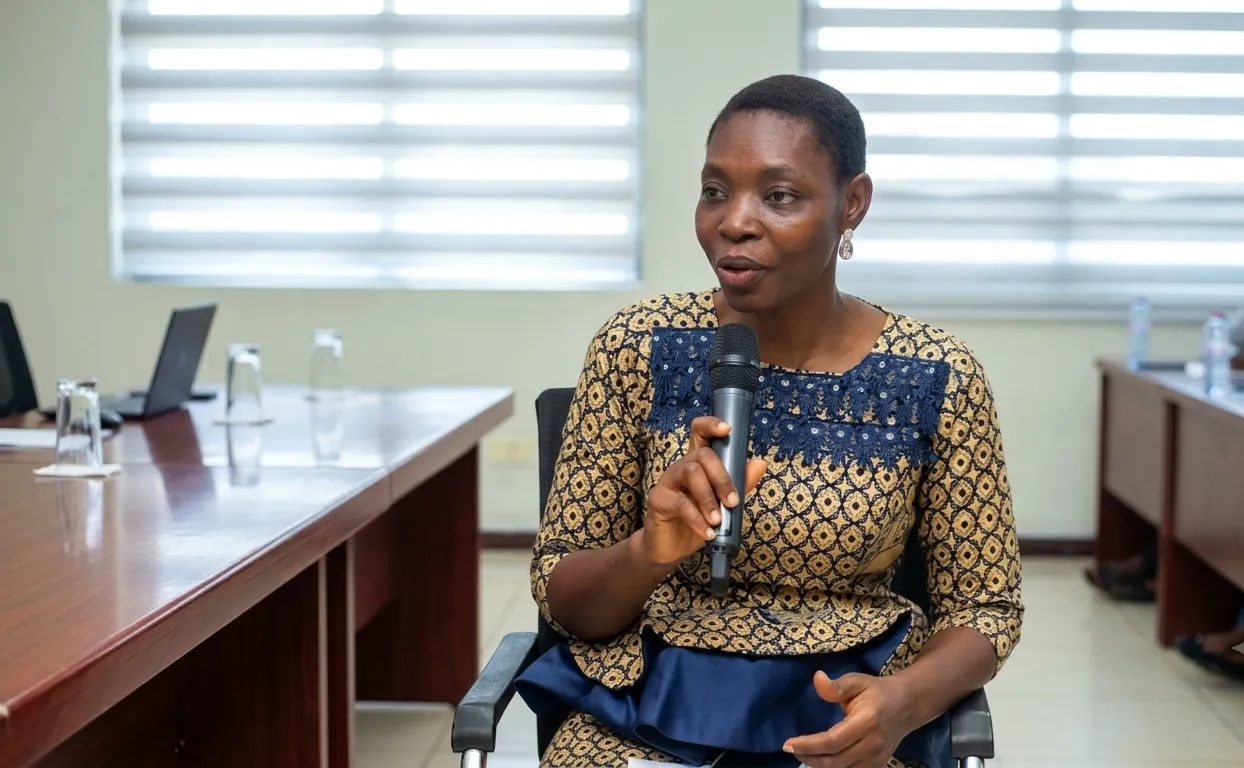
One of the strongest messages came through the panel featuring Mrs Helena Obeng Asamoah, the first Coordinator of Ghana’s Care Reform Initiative; Dr Angela Dwamena-Aboagye of the Ark Foundation; and Jacinta Atakora and Akpene from OAfrica, the first orphanage in Ghana to fully transition to family-based care. Together, they made one point very clear: political will must go beyond policies, standards, and speeches. Policies only come to life when resources are committed to implement them. Governments cannot always wait for donor funding before investing in children and families.
The response from the audience showed that this message resonated deeply. Participants from across West Africa applauded and nodded whenever the need for investment was raised. Africa will not progress through strong documents alone if they are not followed by practical implementation. Too often, support for vulnerable and at-risk children is left to charities. This is not only unsustainable; it also reflects how poorly prevention, family strengthening, and child protection are prioritised in public investment.
The conference also highlighted the strength and potential of the faith sector in care reform. Many participants were faith leaders or affiliated with churches and faith-based organisations. For Partnership for Family Strengthening, this affirmed the urgent need to strengthen partnerships between governments and the faith sector, and among actors currently supporting orphanages, so that resources can be redirected towards strengthening families, preventing separation, and supporting community-based care.
Our five-year strategic plan seeks to mobilise churches into a movement that supports families and facilitates the transition from institutional care to family- and community-based care. This conference has renewed our energy and strengthened our commitment to engage partners around a common vision: an Africa where every child grows up in a family and away from institutions.
We are already pursuing this vision through our flagship project, the Responsive Church Initiative. The initiative has mobilised regional facilitators across 14 of Ghana’s 16 regions, working at the grassroots to engage church and community leaders. Our goal is to make child protection and family strengthening part of the culture of our communities, with a strong focus on prevention and early support.
The West African Alternative Care Conference reminded us that the future we seek is possible—but only if commitment becomes implementation, and implementation is backed by partnership, investment, and courage. For us, the work continues: with churches, with communities, with governments, and with all who believe that children belong in families.
Miracle Damanka
CEO – Partnership for Family Strengthening