“When I was in the institution, I used to ask myself, ‘Why am I here and not anyone else in my family?’ I felt alone. I missed my family so much.”
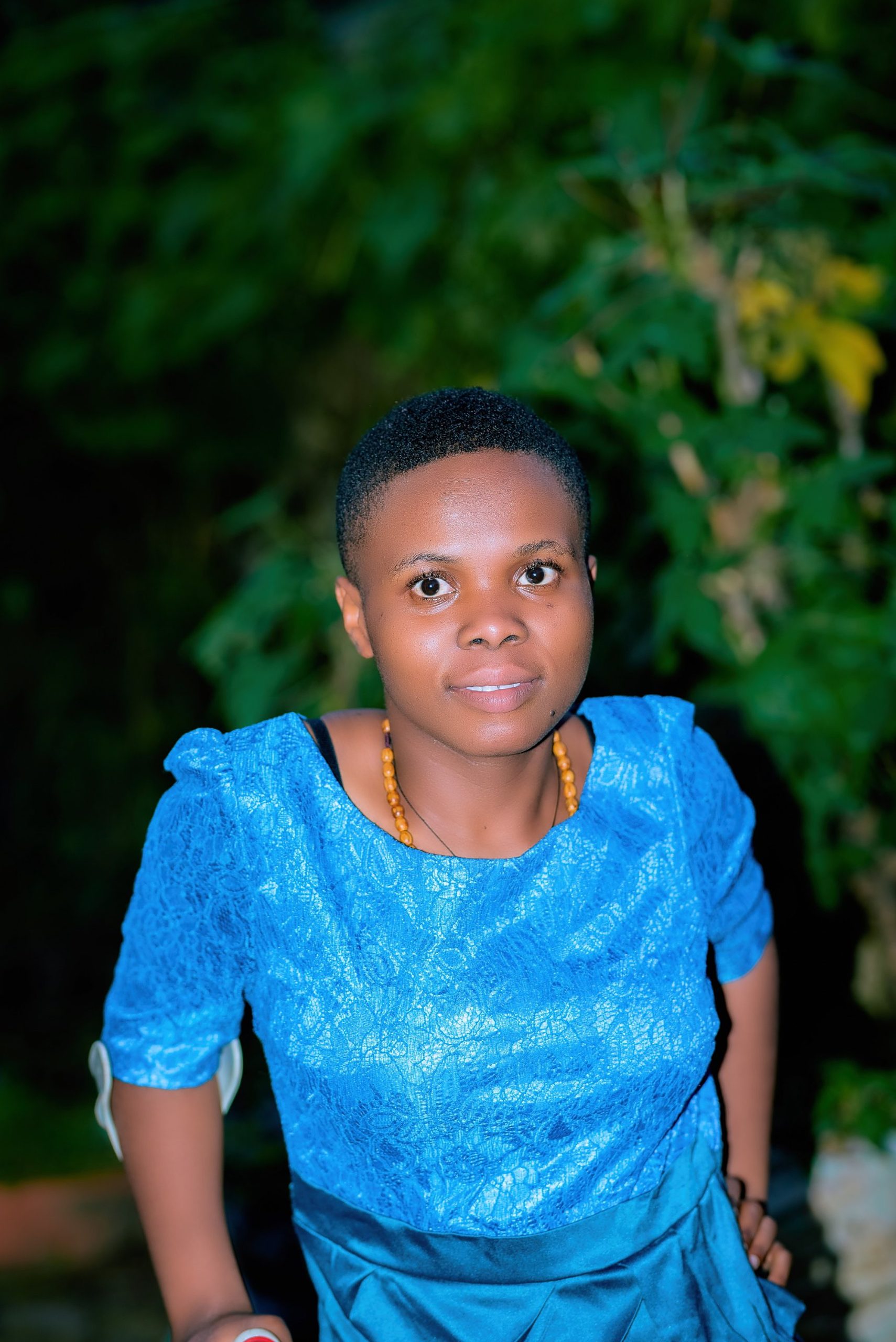
These are the words of Divine, a 24-year-old young woman who uses crutches to move around. Her words reveal more than loneliness; they remind us of something profoundly human: every child, regardless of disability, longs to be loved, to belong, and to grow up surrounded by family.
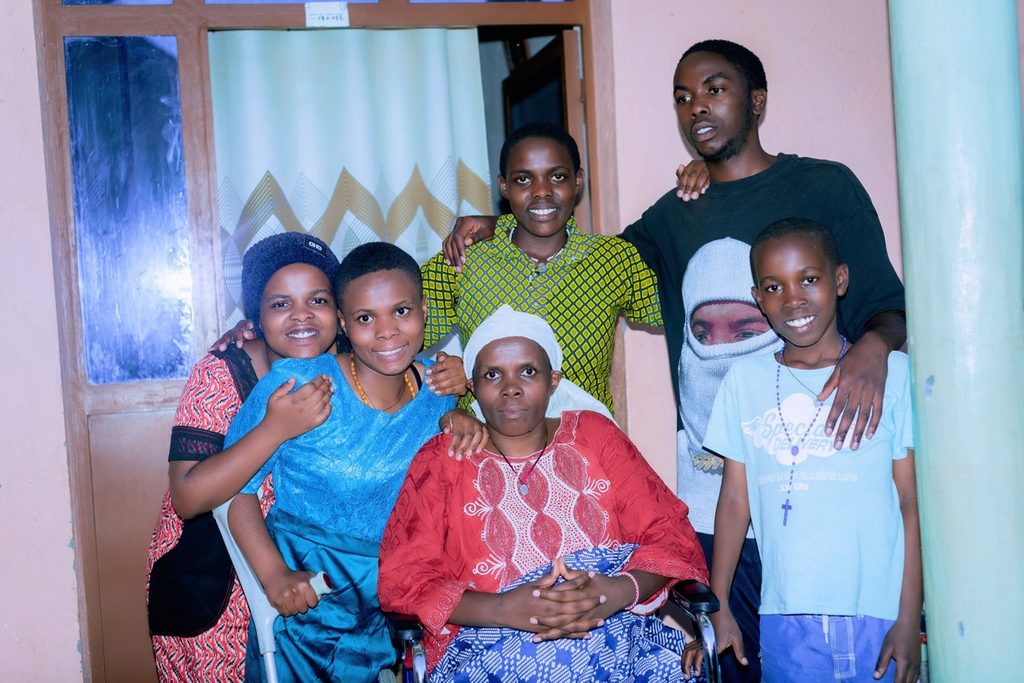
Divine is the second-born in a family of five children. She was raised by her mother, Dusabe, a resilient woman who also lives with a disability. Dusabe uses a wheelchair and relies on a medical catheter for her health needs. Despite the immense challenges she faced, she worked tirelessly to care for her children. However, poverty, limited access to essential services, and inadequate support eventually pushed her into making an impossible decision.
In 2013, when Divine was just 11 years old, Dusabe entrusted her daughter to an institution for children with disabilities. It was a decision driven not by neglect or abandonment, but by desperation and hope: hope that her daughter would receive food, access education, and benefit from healthcare and rehabilitation services that were unavailable in their community. Like many parents facing similar circumstances, Dusabe was not choosing between her child and an institution. She was choosing between having no support and accessing the only support available. Unfortunately, that decision came at a devastating cost.
Across Africa and around the world, families raising children with disabilities often encounter barriers that would overwhelm even the strongest households. Poverty, inaccessible infrastructure, limited healthcare, inadequate educational opportunities, and stigma create immense pressure on families. Yet, instead of bringing essential services closer to families, many systems are structured in ways that require children to leave their homes to access the support they need.
Rehabilitation centres, special schools, healthcare services, and other forms of assistance are often concentrated in institutions or distant facilities. Rather than asking how services can reach families, the system expects families to bring their children to the services. The consequences are far-reaching: parents who need support are left with impossible decisions, children who need care are separated from those who love them most, and families who want to remain together are forced apart. In such circumstances, neither the child nor the parent has a meaningful choice.
For Divine, separation meant spending ten years away from her family. Ten years away from the people she loved. Ten years marked by loneliness, silence, and the constant question of why she had to grow up apart from her mother and siblings. Like many children living in institutions, what Divine wanted most was never a building, a bed, or an institution. She wanted her family.
A New Beginning: In 2022, Divine’s life began to change when she became part of a family reintegration process supported by Hope and Homes for Children. When she learned that she would be reunited with her mother and siblings, her face lit up with excitement. The prospect of returning home and once again being surrounded by the people she called family filled her with joy.
However, reintegration is about much more than bringing a child home. Years of separation can leave deep emotional wounds for both children and their families. Divine and her family carried fears, uncertainties, and painful memories of the years they had spent apart. Healing, therefore, had to come first.
Through counselling and preparation, Divine and her family received support to rebuild trust, strengthen relationships, and prepare for life together again. Practical assistance was also provided to strengthen the family’s resilience. A rental house was built for Dusabe, creating a reliable source of income to help support Divine and the entire family. This was more than material assistance; it was an investment in family care, stability, and the future.
In 2023, the long-awaited reunion finally happened. There were hugs, tears of joy, and tears for the years lost to separation. Above all, there was relief that Divine was finally where she belonged: with her family.
Today, the love and support of her family have given Divine a renewed sense of belonging and hope for the future. She dreams of becoming a lawyer or journalist, using her voice to champion the rights of marginalized people and speak up for those who are too often overlooked and unheard.
Children with Disabilities Have the Same Right to Family, Returning home transformed Divine’s life. She felt accepted, valued, and supported. Her family’s home was adapted to improve her mobility and independence, and she continued her education while living alongside the people who cared for her most.
Her story brings us back to a fundamental principle that is too often overlooked: children with disabilities have the same rights as every other child, including the right to grow up in a safe, loving, and nurturing family. These rights are not protected by separating children from the people who love them. They are upheld when families receive the necessary support, communities become inclusive, and essential services are accessible to everyone, regardless of disability.
Building Systems That Strengthen Families: The real lesson from Divine’s story is not simply that one child returned home. It is that family separation is often preventable. When governments invest in community-based rehabilitation, inclusive education, accessible healthcare, social protection programmes, and family strengthening services, families are better equipped to remain together.
When disability support is available within communities, parents are not forced into impossible choices. When society recognises children with disabilities as valued members of their families and communities, they are no longer treated as burdens but recognised as children with rights, dreams, abilities, and limitless potential.
Our goal must be to build systems that wrap around families rather than replace them; systems that empower parents instead of separating them from their children; and systems that recognize that every child, regardless of ability, belongs in a safe, loving, and nurturing family.
A Call to Action
Divine’s story is powerful, but it should not be exceptional. Thousands of children with disabilities across Africa continue to grow up away from their families because the support they need remains out of reach. This is not inevitable. It is a challenge that requires deliberate action, investment, and collective responsibility.
Governments must invest in inclusive, community-based services that enable children with disabilities to access education, healthcare, and rehabilitation without leaving their families. Development partners must prioritise family strengthening, inclusive support systems, and the prevention of unnecessary family separation. Civil society organisations must champion the rights of children with disabilities to family care, while communities must challenge stigma and discrimination and embrace inclusion.
Let us build a future where no parent is forced to surrender a child simply because the support they need is unavailable. A future where disability does not become a reason for separation, where families are supported rather than judged, and where every child has the opportunity to grow up surrounded by love, dignity, and belonging.
Because every child deserves a family.
